Sunday, 26 December 2021

The Gentle Giant : Mal Evans

Mal Evans by Guest Blogger Jackie Spencer


Hi there, I'm Jackie. I've been a tour guide in the City of Liverpool since 1995, and in the tourism business since I was only sixteen...all those years ago! My private tours are the real deal for Beatles Fans travelling Across the Universe to see my fabulous City. I hold the coveted Blue Badge, the top qualification in tour guiding as recognised by travel companies Worldwide and am one of Liverpool's few officially certified Beatle Guides.
 
After working on the Magical Mystery Tour bus for several years, I realised that some fans wanted more than just a coach tour and so set up the absolute first organised private taxi tours of The Beatles Liverpool in 1998 (a good 10 years before any of the others claiming to be the first). This won me the title of Merseyside Small Tourism Business of the Year in 2001. I have been awarded the Trip Advisor Certificate of excellence every year since 2011, which has now earned me a place in the Trip Advisor Hall of Fame.  More recently I was awarded the Bespoke Tour Operator of the Year, and Tour Guide of the Year categories at the Luxury Travel Awards.
 
I have been recognised as a Beatles expert (to me I'm just a fan) and was chosen to work with Cirque Du Soleil when they researched the ‘Love’ show. I've also worked with many VIP’s and celebrities, advised film & television companies including MTV & VH1 and have appeared in several Beatles documentaries. Most recently has been the upcoming Stars North production, "Pre:Fab', the life of Colin Hanton. I also collaborated with the wonderful Lush Spa as they created a Beatles themed treatment.
 
I can be heard regularly on Sirius Radio Beatles Channel talking about Liverpool Beatle Locations and was delighted when the producers of Carpool Karaoke featured my tweet on the most successful Paul McCartney edition. I'd love to think Paul OK'd that!
 
With the tourist industry currently at a standstill because of the pandemic I was happy to take up the offer to do a guest blog on ‘There Are Places I Remember’ (“about whatever I wanted”).
 
One of the main things I took from the whole ‘Get Back’ series was the fact that Mal Evans was always there for the Beatles. He’s one of the heroes of the film, especially in the final episode where he does his best to keep the Police detained until the Beatles finish their rooftop concert.  Officially their road manager and minder but so much more, one of the loyal and trusted friends from Liverpool who the Beatles took with them on their amazing journey and remained with them until the very end. I wanted to find out more about Mal and his early life and the important places in his story.


31 Lorne Street, Fairfield, L7

Malcolm Frederick Evans was born on 27 May 1935 at 31 Lorne Street in the district of Fairfield of Liverpool, not far from Newsham Park.  This was in fact his Grandparents home where his Mum had grown up.  His Mum was Joan Hazel Evans. His Grandfather was Alexander and according to the 1911 census he was a coachbuilder - a man from the motor trade. His wife was called Annie. 


It gets confusing because their daughter Joan Hazel Evans met and married Frederick William Evans, so she never changed her surname, and despite Evans being a very Welsh name we have to go back about five generations to find anyone in either family actually born in Wales.


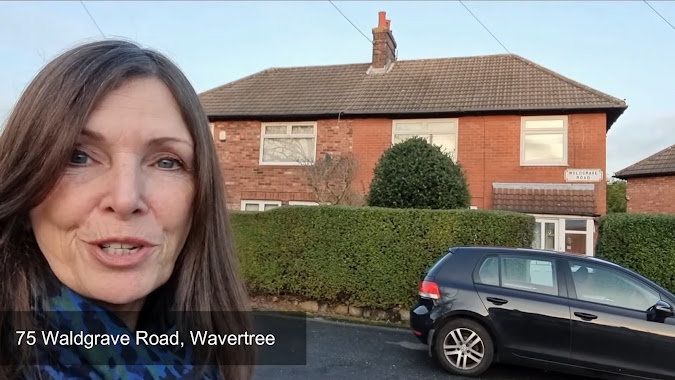
When Mal was just a couple of years old his family were given social housing, a corporation house at 75 Waldgrave Road, Wavertree and this was where he was to live right up until his marriage.

75 Waldgrave Road, L15  

Mal lived here with his Mum and Dad, Fred and Joan and three younger sisters from around 1938 until 1957. 

Waldgrave Road is the home that Mal’s own children Gary and Julie remember visiting to see their grandparents.

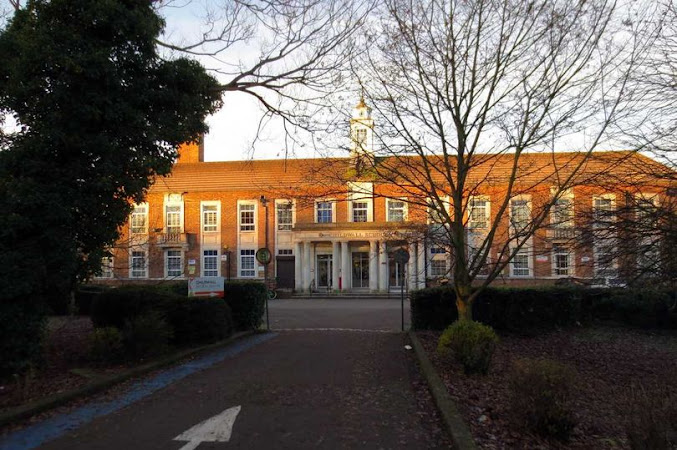
He attended Northway Primary School, which is still there today, facing Mal's house, and later The Holt High School for boys on Queens Drive near Childwall Fiveways, known today as Childwall Sports and Science Academy.

Mal's father Fred worked in the fruit warehouses. Ironic that Mal was to work in one too.... the Cavern Club!


Mal met local Liverpool girl Lily White at New Brighton funfair, just a ferry across the Mersey.


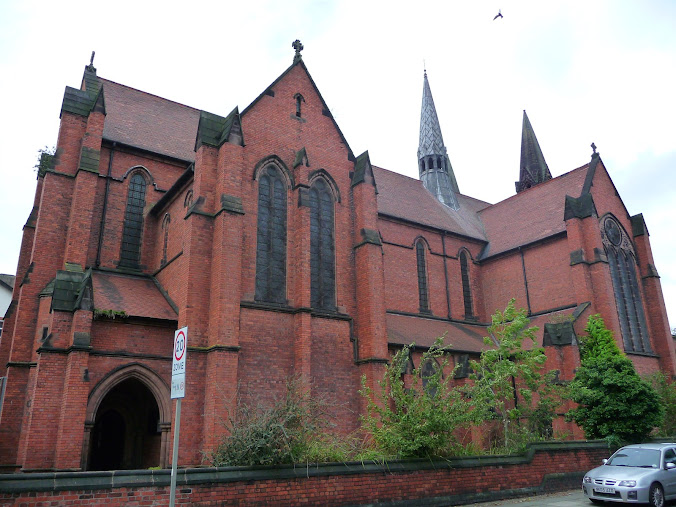
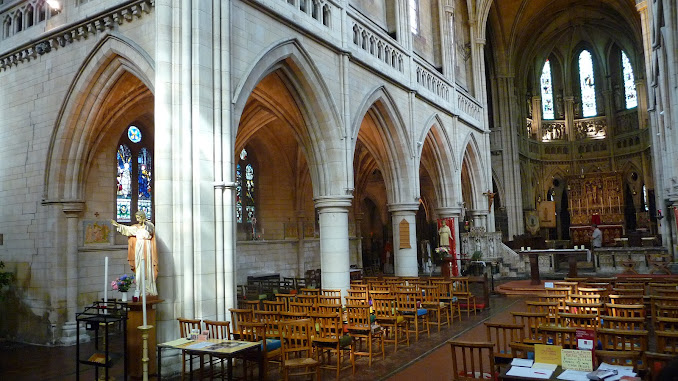
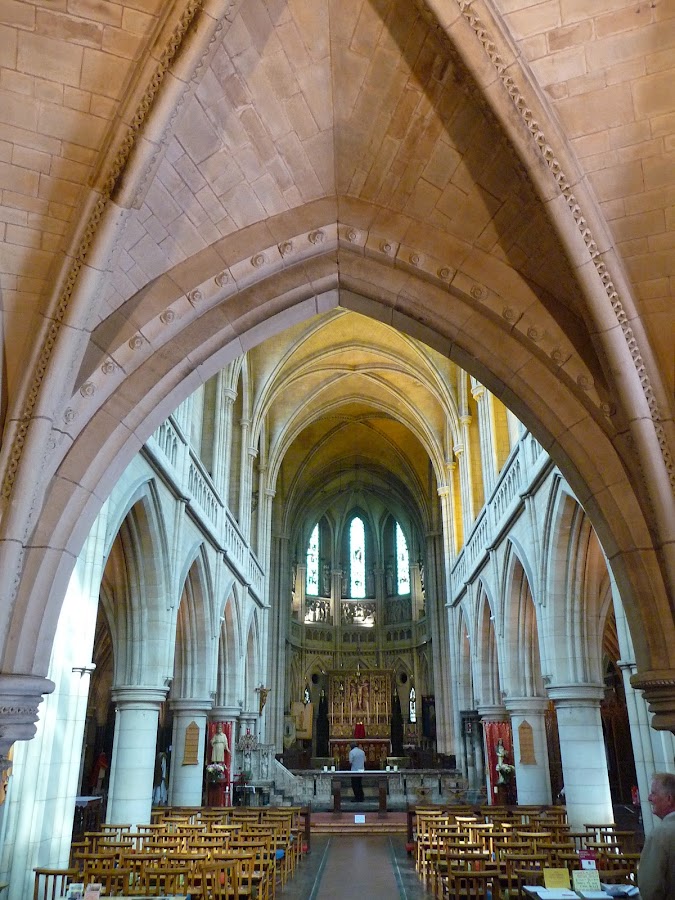
They were married on 28 September 1957 in the magnificent St Agnes and St Pancras Church on Ullet Road, close to Sefton Park.


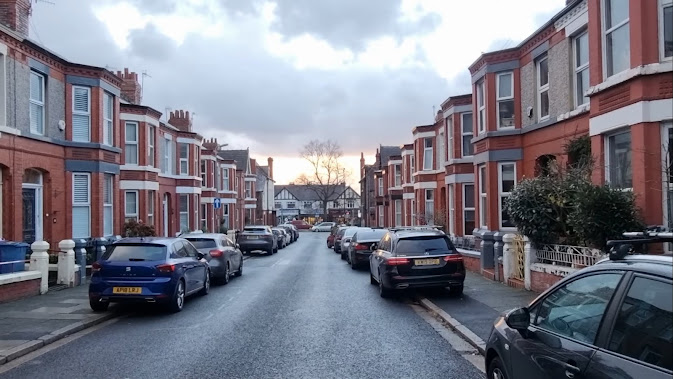
For the first couple of years of married life Mal and Lily Evans lived here at 12 Kenmare Road, a street of terraced houses off Smithdown Road, Wavertree near Sefton General Hospital.  


28 Hillside Road, L18

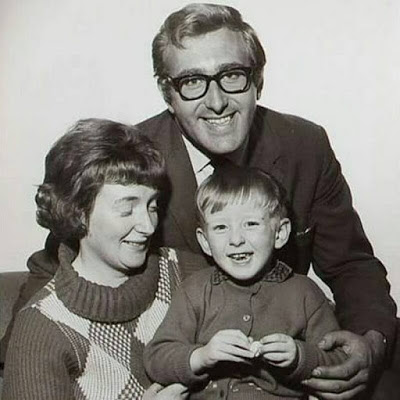
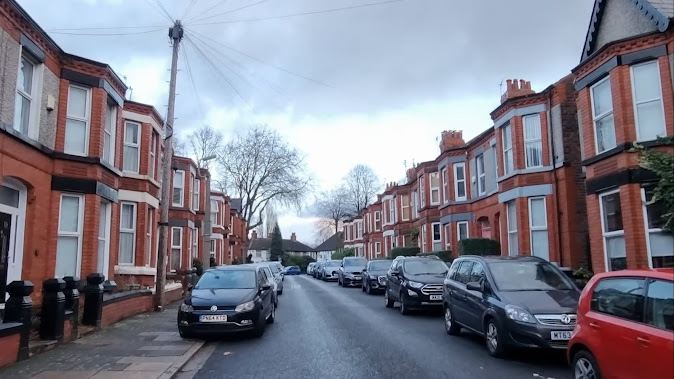
Mal had a decent steady job as a telephone engineer for the General Post Office and they moved to 28 Hillside Road, in the Mossley Hill district of Liverpool. A couple of years later their first child, Gary, was born in October 1961.

Mal, Lil and Gary Evans.

To put this area into perspective it’s a really nice part of Liverpool.  At the bottom end of the street, if you were to take a right turn that would bring you to the famous Penny Lane.  A left turn would take you to Allerton, the area where Paul McCartney was living. 

At the top end of the street is Menlove Avenue, where John Lennon was living with Aunt Mimi.

Thursday, 1 December 2016

Olivia Harrison: Living in the Material World book and DVD signing at HMV Liverpool One

HMV
Liverpool One
South John Street
L1


1 December 2011


Facebook helpfully reminded me this morning that 5 years ago today I was lucky enough to meet the late George Harrison's wife Olivia at a book signing event held at the large HMV Store in Liverpool One. Here's some photos and memories of the night.

Advertisement

Grammy Award winning producer and philanthropist, Olivia Harrison celebrates the release of her book, and the Martin Scorsese biopic film on DVD and Blu-Ray, ‘George Harrison – Living in the Material World’ with a signing session at HMV’s Liverpool ONE store, South John Street on Thursday 1st December 2011.

This was an opportunity not to be missed.

Leaving my office in Mathew Street later than usual, I made my way over to Liverpool One with my mate Stephen Bailey to meet up with our usual crowd of Liverpool based Beatles’ friends. I seem to recall some of them were quite near the front of the queue so we joined them, and probably got a few dirty looks from the people behind us.


The doors opened around 6pm and we made our way inside where we were advised to queue between the CD racks until we were called forward in turn to meet Olivia and get our books and DVDs signed.  But first we had to buy them...

There are many reasons why George is my favourite Beatle and any new product bearing his name which contains previously unseen photographs or film footage or audio recordings will usually get my seal of approval.

Olivia's appearance was to promote the DVD release of Martin Scorcese's Living In The Material World movie, and her companion book of the same name.

Prior to the release of the DVD the film had been broadcast as a two part Arena special on BBC 2 a fortnight earlier on 11 and 12 November 2011.

I absolutely loved it. With seemingly unlimited access to the Harrison's archive Scorcese uses never-before-seen stills and footage to trace George's journey from his birth in 1943, through his years with The Beatles, his solo career where he juggled music, philanthropic work and a career as a movie impresario, the joys and pain of his private life through to his untimely passing in 2001.

I particularly enjoyed the private home videos, photos and previously unreleased versions of some of George’s most popular songs expertly chosen by Scorcese to underpin the story of the "Quiet One". In fact, Living In The Material World shows that George was anything but quiet.

Both the film and Olivia's book are filled with reminiscences from Harrison’s family including his son Dhani, first wife Pattie Boyd, his brothers Peter and Harry and sister Louise; musicians Paul McCartney, Ringo Starr, Eric Clapton, Tom Petty and Phil Spector; Pythons' Terry Gilliam, and Eric Idle, and many, many others.

The promotional material for the film described it a a profoundly intimate and affecting work of cinema. I wholeheartedly agree. In parts I was laughing out loud, in others I was in tears.

In my opinion Tom Petty had the funniest stories to tell about George, including this one about ukuleles: "He came in with two ukuleles and gave me one. 'You gotta play this thing, it's great! Let's jam.' I have no idea how to play a ukulele. 'Oh, it's no problem, I'll show you.' So we spent the rest of the day playing ukuleles, strolling around the yard. My wrist hurt the next day. But he taught me how to play it, and a lot of the chord formations. When he was going I walked out to the car and he said, 'Well, wait... I want to leave some ukuleles here.' He'd already given me one, so I said, 'Well, I've got this.' 'No, we may need more!' He opened his trunk and he had a lot of ukuleles in there, and I think he left four at my house. He said, 'Well, you never know when we might need them, because not everybody carries one around.'"

By contrast the section where Olivia recounts the night they were attacked in their own home by an intruder and how she fought off the man after he had stabbed George is chilling and left me filled with a new admiration for her. What an amazingly strong woman (and my opinion was reinforced by her candidly talking about having to put up with George's infidelities. “Sometimes people say: what’s the secret of a long marriage? It’s like: you don’t get divorced.”)

Paul McCartney comes across as someone who sincerely loved George, and I personally don't get why some people believe the edits in his interview segments were set up to make him look foolish (implying the Harrison estate wanted to have a dig at Paul).

Towards the end of the Beatles Anthology series there's a bit where a clearly upset Ringo Starr recounts the demise of the group. In Living In the Material World it's Ringo again who gets to pull on the viewer's heartstrings, as overcome with emotion he talks about going to visit George shortly before he died. It's incredibly moving and I don't mind admitting I shed a few tears watching it.

Overall the film is a rare glimpse into the mind and soul of one of the most talented artists of his generation and a worthy successor to Scorcese's Bob Dylan biopic No Direction Home. My only complaint is that even with a running time of 208 minutes it's still not long enough to cover all of George's solo records - there's no mention of the Cloud Nine album for example, which rejuvenated his career in 1987.


A worthwhile companion to Scorsese’s film, similarly drawing on George’s personal archive of photographs, letters, diaries, and memorabilia, is Olivia’s book which reveals the arc of his life, from his guitar-obsessed boyhood in Liverpool, to the astonishment of the Beatles years, to his days as an independent musician, gardener and motor racing fanantic. It’s a great book, something I was happy to tell Olivia when it was my turn to step forward.


She asked me my name and began to sign. After telling her I enjoyed the film and not really knowing what else to say to her I asked the obvious “How are you doing?" and hoped I didn't come across as a scouse Joey Tribbiani.


She stopped writing and looked up at me and smiled and then turned to her aide and said 'I love it that whenever I come to Liverpool people always ask how I am'. I said that was good to know. Olivia was charming and gracious and, I suspect, as hard as nails. I thanked her and walked away, hoping Stephen had got a good photo or two of me with her.


This photo of my friend Ellie with Olivia made it onto the official George Harrison website. She pops up everywhere that girl!! 


Source:

http://www.georgeharrison.com/book-reviews-liverpool-signing-for-living-in-the-material-world/

Published 1 December 2016

Friday, 23 September 2016

Head Girl

33 Head Street,
Toxteth
Liverpool 8


The Birthplace of Julia Stanley

John Lennon's maternal family was Welsh.  His Great-Grandmother Mary Elizabeth Morris, whose family were all farmers in North Wales, was born on the family farm of Berth-Y-Glyd, in the village of Llysfaen, just outside Llandudno.

At some point she met and married John Millward from Flintshire in North Wales. They were living in Chester, when in 1873 their daughter Annie was born in the famous Bear and Billet Inn in Lower Bridge Street. Annie Millward would be John Lennon's Grandmother.

The Millwards moved to Liverpool when Annie was a small girl. Reportedly a wealthy Welsh uncle left Mary a tidy sum of money, so she bought five or six little properties dotted all around where workmen would shortly commence construction of the Anglican Cathedral in 1904. She rented these properties out and when they became vacant the Millwards would move in until a new tenant could be found. After Annie grew up and met George Stanley they continued living in the various houses and flats.

The story of the Stanley legacy, actually the Millward legacy, has been told verbally by John Lennon's cousin Stanley Parkes, and in print by John's half sister Julia Baird*. The alternative theory put forward to explain why the family had to keep moving addresses is because they were on the breadline and could not afford the rent. In fact there is no hard evidence supporting either explanation. Is it possible perhaps that the legacy story was told to save face whenever one of the kids asked why they had to move house again? Maintaining the right public image to give the impression that they were of a higher class than their neighbours was certainly a Stanley trait as Julia Baird's book confirms.

Annie's future husband George Ernest Stanley was born in 1874 in the Shaw Street area of Everton. John Lennon would know him as "Pop" Stanley. How he met Annie Millward is unclear but what is known is that by 1899 they had produced their first child and uncommonly for the times, did so out of wedlock.

What was common at that time was the heartbreak of infant mortality. Sadly their first two children died, Charlotte Alice in April 1900 (age 9 months) from pneumonia, and their only son, George Earnest in April 1903 (aged just 3 months) from indigestion.

Both children were buried within the grounds of St James Cemetery, just two of the 57,774 laid to rest between 1860 and 1936 in what was then the Liverpool's city cemetery.

Thankfully over the next ten years they would produce five healthy daughters. As a consequence of their living arrangements the five Stanley sisters were all born at different addresses.

Their third child, Mary Elizabeth Stanley (John's Aunt 'Mimi') was born on 24 April 1906 and baptised at St James Church just under a month later on 23 May. At this point the Stanleys were living at 21 Windsor Street, a short walk from the church but they were not here long. When George and Annie were finally married at the Liverpool Parish Church, St Peter's in Church Street, on 19th November 1906 they had moved to Cornwallis Street close to the Public Baths.

In 1908 whilst living at 5 Emerson Street, Annie gave birth to another daughter, Elizabeth Jane on 29 November. She was baptised at St James Church ten days later. To John and his cousins she was known as 'Mater'.

Julia Stanley (Left)

Annie ('Nanny') was born in 1911, Julia ('Judy', John Lennon's mother) in 1914 and finally Harriet ('Harrie') in 1916.


Three of the Stanley sisters. Left to right: Mater, Harrie and Mimi 


St James Church, where the Stanley daughters were baptised, sits on St James Place at the corner of Upper Parliament Street and Park Road, just a short walk from whichever property they were living in at the time.


The church was built in 1774–75 by Cuthbert Bisbrown, who also probably also designed it. The land was presented by Lord Sefton and the church, which costs £3000 was paid for by local shareholders. It was opened for its first service on June 4, 1775. The timber roof was added in 1846 by William Culshaw. The chancel, designed by H. Havelock Sutton, was built in 1900. At its peak in the late 1800s the congregation of St James  was so huge that there were 1,000 children in the Sunday School!

To local historians St James is of huge interest as one of the oldest standing churches in Liverpool. The architectural style of the interior is 'conventionally Georgian'. There are galleries on three sides, carried on slim quatrefoil cast iron columns said to be the earliest remaining examples in the whole country, which is why I was keen to visit it when it was opened to the public during September's annual Heritage Weekend.

Cast and wrought iron were to revolutionise the architecture and engineering of the 19th century and at St James we can see, in embryo, the start of the giant leap into vast light fireproof prefabricated structures, technology employed locally with great success during the construction of Liverpool's docks

Cast Iron column supporting the gallery. (Left)

The church of St James has often been referred to as ‘the slave church’ as many of the 27 shareholders who contributed to its cost were merchants engaged in the slave trade.

Inside the church there are 19 monuments dating from the late-18th and the early-19th centuries, many to the memory of people connected with the slave trade.

The burial registers of St James feature the names and origins of people from all over the world, including several who were black, buried without discrimination alongside each other in the church grounds. From about 1900 the graveyard was closed for internment and part of the land was used to widen St James Place. The remaining part of the yard was subsequently grassed over, which is how it remains today. 


In the east window is stained glass designed by Henry Holiday, dated 1881.

On 1 October 1974 the church was declared redundant, and on 9 June 1976 was vested in the Churches Conservation Trust. At one point the church was to be demolished to make way for a new motorway and ring road, plans which saw the demise of the David Lewis Theatre close by.  Luckily the planned road improvements were never made and St James was saved . In May 2010 the church was returned to the Liverpool Diocese and re-opened as the Church of St James in the City.  As it was in a "semi-derelict condition", a marquee was erected within the church to allow the resumption of worship. Repairs are being undertaken to secure the church's structure but as with the restoration of any historic building this will take time and a lot of money.


John Lennon's mother Julia was born on 12 March 1914 at 33 Head Street***, five months before the start of the Great War. At the time of Julia’s birth this was an area of poor quality dwellings as these photographs illustrate. 


Critchley Court. Poor quality 'Court' Housing in Back Chester Street which backed on to Head Street (1911). 


The maps show Head Street packed with back-to-back buildings of all different heights, squeezed into the space between Chester Street and Dexter Street. There was a mix of cramped court housing, tiny yards and workshops, with the whole area book-ended by the Anglican church of St James and the Catholic church of St Patrick.


Both churches are still there, but most of the streets in between have long since disappeared. Today, Head Street is little more than a small industrial estate, with workshops and small businesses where the houses once stood.

Some of the original buildings were still around as late as 1968, although the slum clearances may have begun as early as the 1940s — perhaps with a bit of unasked-for help from the Luftwaffe. We know that the last German bombs to fall on Liverpool came down on 10 January 1942, on Upper Stanhope Street, just one road away from Head Street. In a strange twist of fate, one of the houses destroyed was the former home of Alois Hitler, Adolf Hitler’s brother.**


Head Street (1968) looking towards St Patricks Church. The same view (2015) is shown below. Julia's house would have stood bottom right on the new photo.


Of course, by then the Stanleys had left Head Street. They moved several times after Julia's birth, spending much of the post war 1920s living at 23 Cedar Grove off Lodge Lane. By the 1930s they had resettled at 71a Berkley Street, around the corner from Upper Stanhope Street. The outbreak of war in 1939 saw the family move again, for the first time away from Toxteth and the nearby docks to Wavertree.

Berkley Street features again later in the Beatles' story. I'll cover that in a future post.   

Notes:

* Julias book Imagine This, Growing Up With My Brother John Lennon

** Alois Hitler and his family lived at 102 Upper Stanhope Street. Adolf Hitler is rumoured to have stayed with them here during 1912-13. The house was destroyed in the final night of the Blitz and the area is now landscaped.

Link: Watch some fascinating videos about the restoration of St James, presented by the Rev. Neil Short on the St James in the City Facebook page: https://www.facebook.com/St-James-Toxteth-Heritage-Hope-Project-417788251655356/


Another view of Chester Street at the time Julia Stanley was born.


Source:

Stanley family photos found on-line and used with the permission of David Birch.

Original photos of Liverpool from  Liverpool Record Office (LRO)

Thursday, 21 February 2013

Meat The Quarry Men

Stanley Abattoir Athletic and Social Club,
Prescot Road,
Old Swan, Liverpool
L13


There had been a market for livestock in the Old Swan area since 1830. Stanley Market was on a main corporation tram route, Prescot Road being the main road from Liverpool to the manufacturing districts of East Lancashire and Yorkshire. The site was acquired by Liverpool Corporation in 1901 and a new building for livestock and an abattoir costing £670,000 was opened by the Earl of Derby on 14 September 1931.

The largest meat market in Britain had a social club attached to the massive premises which catered for the staff of the huge slaughter house, their families and friends. At a time when they probably knew as much about vegetarianism as Transcendental Meditation the Quarry Men appeared here in a somewhat unusual engagement arranged by their mate / "manager" Nigel Walley. The Quarry Men were booked for a Saturday night dance on 16 November 1957, playing (as they regularly seemed to do during their formative years) on either side of the interval.

It is reported that their allegedly “cacophonous” performances were not well received and they were not re-booked. It seems they had spent some time calming their nerves in the nearby Cattle Market Public House which resulted in one or two band members being a little "worse for wear". (see also Finch Lane L.C.P.T).


At the time the area would have been quite unfamiliar to them being several miles and several buses away from their homes in South Liverpool. Within a few years however they were making regular appearances at St John’s Hall in Tuebrook, little over a mile away down Green Lane and hanging out at the home of Al Caldwell (Rory Storm) in nearby Broad Green.


A still from the film "Nowhere Boy" showing how the Quarry Men might have looked at the time of their appearance at Stanley Abattoir.

A busy scene at the Abattoir in 1958

Between 1956 and 1958 a serious outbreak of foot-and-mouth disease spread across the United Kingdom, peaking in 1957 when 20 counties in England and Wales, mostly in the North-West, were affected. Over 30,000 animals were slaughtered as a result. 

On 28 December 1957, just over a month after the Quarry Men appeared, the abattoir was shut down after foot-and-mouth disease was found in cattle waiting to be slaughtered. Inspectors from the Ministry of Agriculture were called in when eight suspected cases were found in carcasses. The Inspectors subsequently found 10 more cases in live cattle at the abattoir.

After being given the all-clear the abattoir re-opened on 2 January 1958 and operated until 1971. 

Liverpool's only wholesale meat and fish market continues to trade to this day selling meat purchased from local North West farmers using local abattoirs.


The Abattoir looms in the background of the former Stanley Public House which now stands forlornly on Prescot Road.


Another public house on the same street. Completed in the same year as the abattoir, the Cattle Market at 329 Prescot Road was visited by the Quarry Men prior to their engagement. The pub has since been demolished. (Photo courtesy of Ged Fagan, 3.8.70).


Stanley Abattoir pictured in 1959, two years after the Quarry Men's engagement.

Links:
Published 21 February 2013